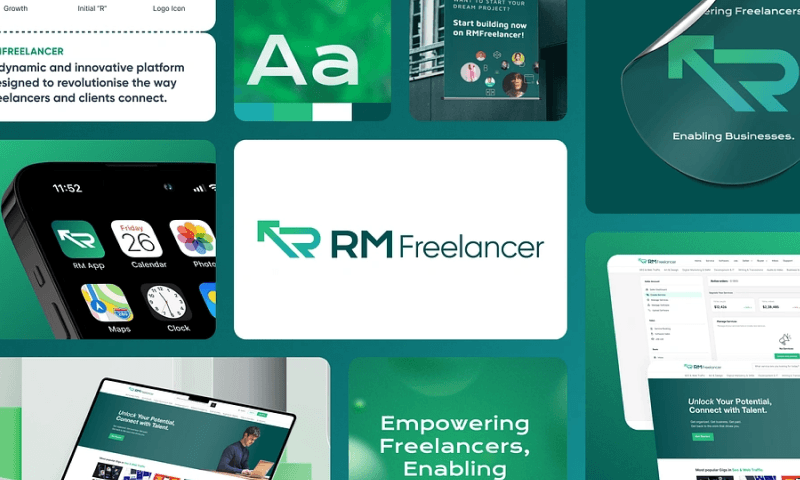
RMFreelancer
Building a Niche Marketplace That Solves a Real Hiring Problem



Challenge
Businesses looking to hire SEO professionals on general freelance platforms face a consistent set of problems. Search results are overloaded, profiles lack meaningful context around technical competence or methodology, and the volume of proposals makes it difficult to identify genuine expertise. For skilled SEO professionals, the same platforms make it hard to stand out when their services sit alongside thousands of unrelated offerings. The result is a poor match experience on both sides, with trust being the biggest casualty. RMFreelancer was created to address this directly, but building a new platform introduced its own challenges. A niche marketplace still needs to support a wide range of complex workflows across two different user types, including freelancer onboarding and verification, business account creation, job posting, proposal handling, contracts, payments, and messaging. Designing these flows poorly compounds friction quickly, and every awkward step increases the likelihood that a user abandons the process. On top of that, as a brand new platform with no existing reputation, RMFreelancer needed to earn trust from both freelancers and businesses before either group had any reason to commit time or money to it. That trust had to come through brand positioning, interface quality, and consistent system behaviour rather than testimonials or track record.
Solution
Cuebites approached RMFreelancer as a full product build rather than a marketing site with added functionality. The strategy was to establish strong positioning first, defining clearly what the platform was and what it was not, and then translate that into a user experience and technical foundation that could support both sides of the marketplace equally. Every decision, from the brand tone to the individual workflow steps, was made with the goal of reducing uncertainty and building confidence in a platform that was asking users to trust it from day one.
Implementation
The first phase established the brand identity and product positioning. This meant defining a clear niche focus on SEO services only, developing messaging that spoke directly to businesses seeking specialist expertise, and setting a professional tone that would appeal to experienced freelancers rather than casual gig workers. The positioning was designed to signal from the outset that this was a serious environment for SEO work. UX design followed, with distinct journeys built for each side of the marketplace. Business users were given a straightforward job creation flow with structured requirements and an easy proposal review and communication experience. SEO freelancers received profile creation tools focused on demonstrating expertise, proposal flows aligned with how SEO work is actually scoped, and clear contract and payment handling. Design decisions across both journeys were guided by the principle of reducing uncertainty at every step. The full platform was then built from scratch, covering authentication and account management, marketplace logic, job and proposal workflows, messaging, and transaction handling. Thorough testing ensured the system behaved reliably under real usage conditions. Following the build, technical documentation and system overviews were produced to support future development and ensure the platform could evolve without knowledge being locked inside the codebase.
Optimization
At launch, RMFreelancer was a fully functional SEO-only marketplace with smooth onboarding for both freelancers and businesses, reliable workflows across the full hiring lifecycle, and a brand presence that communicated professionalism and focus. The niche positioning gave the platform a clear point of difference from general marketplaces, which matters considerably when you are asking both user types to choose a new platform over established alternatives. The combination of intentional UX, a stable technical foundation, and consistent brand tone gave the platform the kind of credibility at launch that most new marketplaces take considerable time to build. The documentation produced also meant the team could continue developing the product without the typical friction that comes when institutional knowledge is not captured properly.
Case studies