Gorayadoors
Building Connected Systems for High-Volume Sales Operations



Challenge
Goraya Building Supplies was operating in a high-volume B2B environment where customer interactions were happening across too many channels at once. Phone calls, walk-ins, emails, and informal notes were all being managed separately, with no central place to store or retrieve information. Sales teams had no reliable way to check previous conversations, track active enquiries, or know the follow-up status of a lead without asking someone else or digging through their own records. As the business grew, this became a real problem. Opportunities were slipping through the gaps, response times were slowing down, and the effort required just to stay organised was increasing. On top of that, office and field staff were regularly working from different information, which created delays and made coordination harder than it needed to be.
Solution
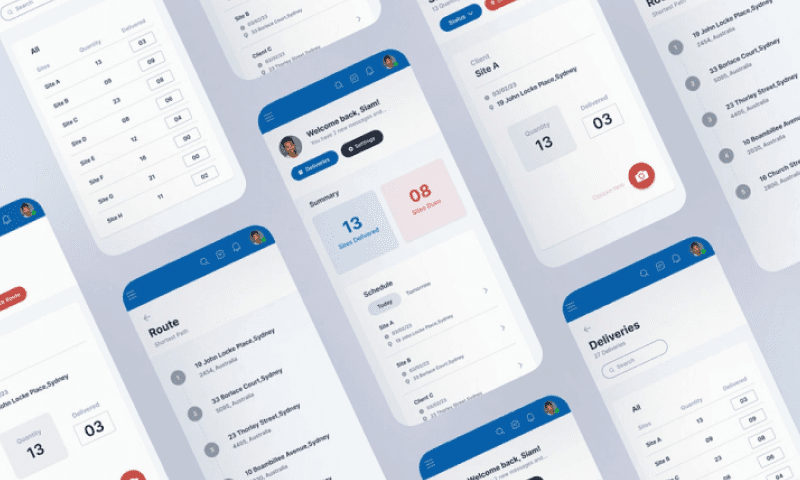
Rather than patching the problem with another disconnected tool, Cuebites approached GorayaDoors as a system-first project. The goal was to design something where every part of the business, from the first customer enquiry through to field operations, fed into the same connected environment. That meant building three components that worked together: a public-facing landing page for structured lead capture, a custom CRM tailored to how the sales team actually operated, and a mobile application that gave field staff access to live data wherever they were. Each piece was designed with the others in mind, so information only needed to be entered once and was immediately available across the whole system.
Implementation
The landing page was built to do one job well: capture enquiries in a structured format and push them directly into the CRM without any manual sorting required. This meant every lead that came in was immediately visible to the sales team and ready to act on. The CRM itself was built around GorayaDoors' actual workflow rather than a generic template. It centralised all customer profiles, tracked sales activity and enquiry history, managed follow-up schedules, and automated a number of the repetitive tasks that were previously eating into the team's time. The mobile app extended all of this to field staff, giving them the ability to pull up customer records, log updates, and track activity in real time without needing to return to the office or wait for someone to relay information.
Optimization
With the web platform live, FlexiJob significantly reduced its dependency on app installs as the primary entry point, which opened the product up to a much wider pool of potential users. Job discovery and the application flow improved, and activity from both job seekers and providers increased as a result. The improved landing pages strengthened ad performance and lead capture, making paid acquisition more efficient. Internally, the admin system gave the team the oversight they needed to manage a growing marketplace without losing control. The result was a platform that was easier to access, easier to understand, and better equipped to scale, with 1,050 sign-ups achieved as the product became genuinely multi-channel.
Case studies